Archives
- 2026-09
- 2026-08
- 2026-07
- 2026-06
- 2026-05
- 2026-04
- 2026-03
- 2026-02
- 2026-01
- 2025-12
- 2025-11
- 2025-10
- 2025-09
- 2025-03
- 2025-02
- 2025-01
- 2024-12
- 2024-11
- 2024-10
- 2024-09
- 2024-08
- 2024-07
- 2024-06
- 2024-05
- 2024-04
- 2024-03
- 2024-02
- 2024-01
- 2023-12
- 2023-11
- 2023-10
- 2023-09
- 2023-08
- 2023-07
- 2023-06
- 2023-05
- 2023-04
- 2023-03
- 2023-02
- 2023-01
- 2022-12
- 2022-11
- 2022-10
- 2022-09
- 2022-08
- 2022-07
- 2022-06
- 2022-05
- 2022-04
- 2022-03
- 2022-02
- 2022-01
-
MAPK are involved in a large
2022-09-09
MAPK are involved in a large variety of solid and hematolgical neoplasms and, indeed, several components of the MAPK network have already been proposed as targets in cancer therapy, such as p38, JNK, ERK1/2, MEK1/2, RAF, RAS, DUSP1 and ERK5 [11], [12]. Among them, alteration of the RAS-RAF-MEK1/2-ER
-
dopamine receptor antagonist br Some general considerations
2022-09-09
Some general considerations on anterior pituitary cell type, models, sex and drugs Historically, real-time analysis of native endocrine anterior pituitary cell excitability has been somewhat limited and thus much of the pioneering work on anterior pituitary cell excitability and stimulus-secretio
-
br Materials and methods br Transparency
2022-09-09
Materials and methods Transparency document Acknowledgments Introduction Hearing loss is the most common congenital sensory deficit. About 1–3 in 1000 children are affected at birth or during early childhood by severe hearing loss, which is defined as prelingual deafness, with at least h
-
Similarly spectrophotometric titrations were carried out und
2022-09-09
Similarly, spectrophotometric titrations were carried out under conditions identical to those used for the fluorescence titrations. exhibited a predominant Bexarotene mg band at around 493 nm. The titrations with all G-quadruplex DNAs resulted in a hypochromic effect along with a bathochromic shif
-
A small number of patients
2022-09-08
A small number of patients (11%) had accessory integrase mutations (E157Q, G163R, L74IM, and/or V151I) that confer potential or low-level resistance and generally only when they occur in combination with other high/intermediate level resistance mutations. This is a somewhat higher incidence than tha
-
Despite these multiple mechanisms of viral persistence
2022-09-08
Despite these multiple mechanisms of viral persistence, one patient has been reportedly cured from HIV-1 infection . Timothy Brown, also known as the 'Berlin patient', was diagnosed with HIV-1 infection in 1995. After controlling viremia for several years via cART, he was diagnosed with acute myeloi
-
Signaling pathways such as BMP FGF and WNT are strongly
2022-09-08
Signaling pathways such as BMP, FGF, and WNT are strongly involved in the process of endochondral ossification and Meckel's cartilage development [20]. Interestingly, absence of BMP antagonist, Noggin, in Meckel's cartilage, resulted in a phenotype, very similar to that of Setdb1 CKO [16]. To examin
-
Almost all of the series and compounds
2022-09-08
Almost all of the series and compounds exhibited higher activities compared with the compounds in the other series. In these series, the tetrazole group was directly linked to a nitrogen atom of the amide group at the C-28 position, and the C-3 hydroxy group was either unmodified, oxidized, esteri
-
The following are the supplementary data related to this
2022-09-08
The following are the supplementary data related to this article. Transparency document Introduction Hypoxia is a pathological process that causes abnormal changes in metabolism, function and morphological structure of tissue because of insufficient oxygen supply. It's reported that hypoxia w
-
br Methods br Results br Discussion TA TMA is a
2022-09-08
Methods Results Discussion TA-TMA is a severe complication for patients after HSCT. The pathogenesis of TA-TMA is unclear. Complement activation and endothelial cell injury may be involved in the pathogenesis of TA-TMA. Our previous investigations had demonstrated that plasma levels of C5b-
-
Since its development the HCV replicon
2022-09-08
Since its development, the HCV replicon system (Lohmann et al., 1999) has been a critical tool in the HCV antiviral discovery process (Gottwein et al., 2009, Imhof and Simmonds, 2010, Lohmann et al., 1999, Pietschmann et al., 2001, Imhof and Simmonds, 2010, Gottwein et al., 2009). The replicon assay
-
Several lines of evidence suggest that thermosensation in
2022-09-08
Several lines of evidence suggest that thermosensation in AFD is unlikely to be mediated by thermosensitive ion channels. AFD exhibits a steep temperature dependence with a reported Q of >1015 for temperature-evoked current, implying a strong amplification step in the thermotransduction process (Ram
-
Extending the issue of the species differences the role of
2022-09-08

Extending the issue of the species differences, the role of neuroestradiol in the preovulatory GnRH/LH surge might be specific to primates or species with a luteal phase. For example, animals with a true luteal phase, such as monkeys and sheep, exhibit a long preovulatory GnRH surge, lasting well af
-
Overall our results indicated the involvement of GABAAR in c
2022-09-08

Overall, our results indicated the involvement of GABAAR in controlling GnRH/LH release through mechanism which included GABA action on molecular processes leading to GnRH biosynthesis. This is consistent with previous in vivo [14,54] and in vitro [55] studies in ewes suggesting that GABA inhibits G
-
Indeed it was shown further in VSV G that
2022-09-07
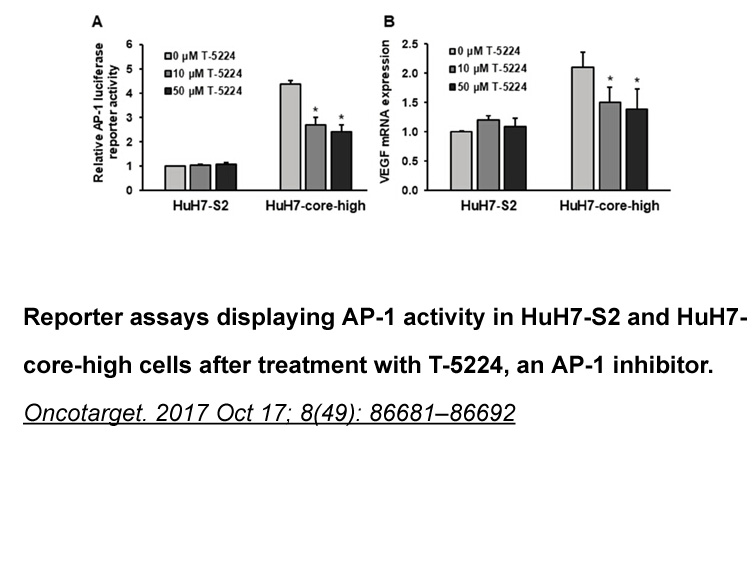
Indeed, it was shown further in VSV G that the H80A mutation, and the E123L and D121L double mutation, which both abolish VSV G fusion properties, were rescued by the same compensatory Q112P mutation. In a single FD, residue 112 is located on the opposite side of the three-stranded β-sheet and is fa
8620 records 438/575 page Previous Next First page 上5页 436437438439440 下5页 Last page